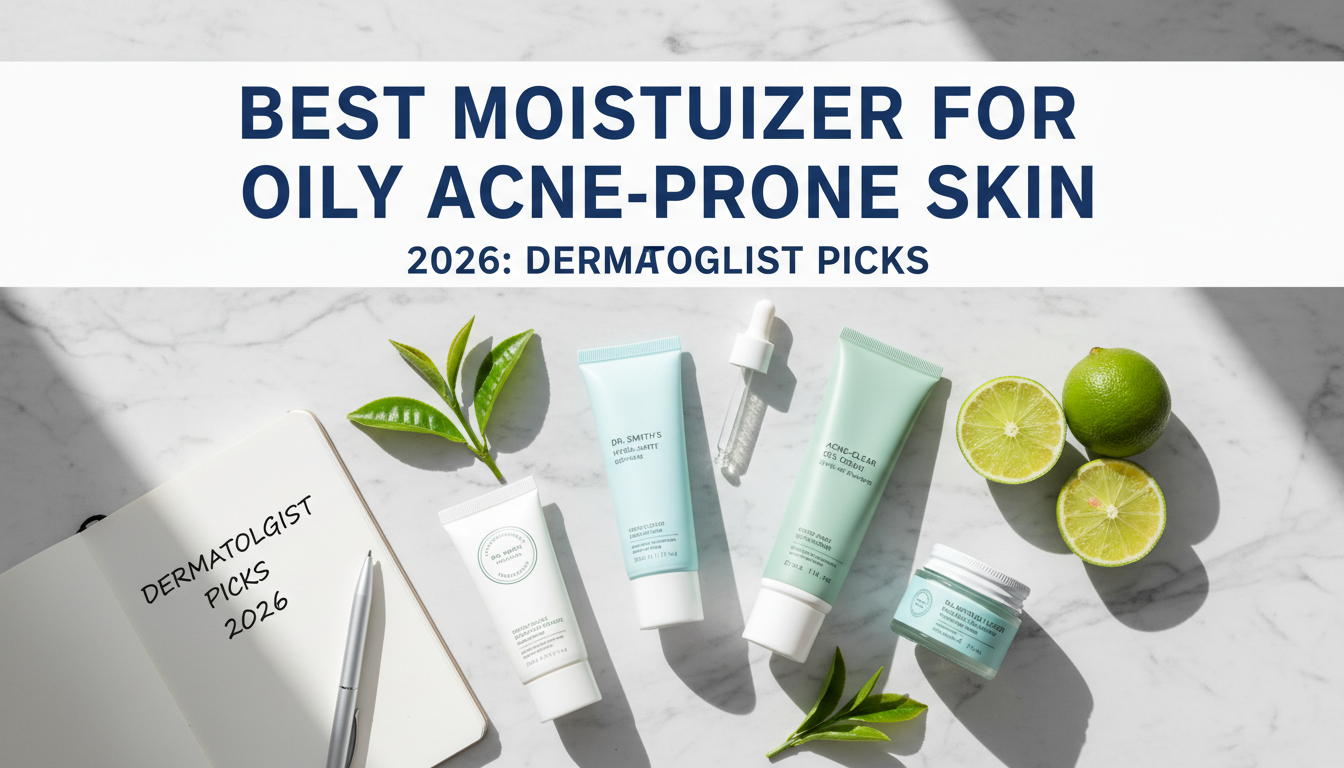
If you have oily, acne-prone skin, the idea of applying a moisturizer might feel counterintuitive. For years, the prevailing logic was to “dry out” the skin to eliminate grease and breakouts. However, modern dermatology has proven the opposite: depriving oily skin of moisture often triggers a compensatory response, causing your sebaceous glands to produce even more oil to protect a damaged skin barrier.
In 2026, the landscape of skincare has shifted toward “smart hydration.” We are moving beyond simple oil-free lotions toward advanced formulations that balance the microbiome, regulate sebum production, and repair the barrier without clogging pores. This guide breaks down the top dermatologist-recommended moisturizers specifically formulated to handle the unique challenges of shine and congestion.
Why Oily Skin Needs a Moisturizer
The secret to managing oily skin lies in understanding the difference between oil and water. Oily skin is a skin type characterized by excess sebum, while dehydration is a skin condition characterized by a lack of water. You can have oily skin that is simultaneously dehydrated.
When the skin barrier is compromised—often due to harsh acne treatments like benzoyl peroxide or retinoids—water escapes through the epidermis. This leads to inflammation, which is a primary driver of acne. A well-formulated moisturizer seals in hydration, calms inflammation, and helps the skin tolerate active acne medications more effectively.
Key Ingredient Education to Look for in 2026
Dermatologists now prioritize multi-functional ingredients that address both the symptoms and the root causes of oiliness. When reading labels, look for these power players:
- Niacinamide (Vitamin B3): A gold standard for 2026, it regulates oil production, minimizes pore appearance, and fades post-inflammatory hyperpigmentation (acne scars).
- Hyaluronic Acid & Polyglutamic Acid: These humectants draw moisture into the skin without adding weight or oil.
- Ceramides: Essential lipids that restore the skin barrier, especially important if you are using drying acne treatments.
- Squalane (Plant-Derived): A lightweight oil that mimics the skin’s natural sebum but is non-comedogenic, providing moisture without the “greasy” feel.
- Succinic Acid: An emerging favorite for its antimicrobial properties and ability to control sebum without irritation.
Top Dermatologist Picks for 2026
The following table summarizes the top performers based on clinical efficacy, texture, and patient feedback.
| Product Category | Top Recommendation | Key Benefit |
|---|---|---|
| Best Overall | La Roche-Posay Effaclar Mat | Dual action: Mattifies skin and tightens pores. |
| Best for Active Breakouts | Neutrogena Hydro Boost Water Gel (Fragrance-Free) | Ultra-lightweight, high-purity hyaluronic acid. |
| Best for Barrier Repair | CeraVe PM Facial Moisturizing Lotion | Contains three essential ceramides and niacinamide. |
| Best Luxury/High-Tech | SkinCeuticals Daily Moisture | Botanical extracts to reduce pore size and provide antioxidants. |
| Best Budget-Friendly | The Ordinary Natural Moisturizing Factors + Beta Glucan | Clear gel formula that provides immediate, non-shiny hydration. |
Best Overall: The Gel-Cream Evolution
In 2026, “gel-cream” hybrids dominate the market. These formulas offer the cooling, weightless feel of a gel with the long-lasting hydration of a cream. Dermatologists frequently recommend these because they absorb instantly, leaving a matte or “soft-focus” finish that works well under sunscreen or makeup.
Best for Barrier Repair: Healing While Hydrating
If you are using prescription-strength retinoids or exfoliating acids, your moisturizer needs to do more than just hydrate; it needs to heal. Products containing madecassoside (derived from Centella Asiatica) or panthenol (Vitamin B5) are highly recommended for soothing the redness and peeling often associated with acne-prone skin.
How to Apply Moisturizer to Oily Skin
Application technique is just as important as the product itself. To maximize absorption and minimize shine, follow these expert steps:
- Cleanse gently: Use a pH-balanced cleanser to remove excess oil without stripping the skin.
- Damp Skin Method: Apply your moisturizer while your skin is still slightly damp. This helps humectants like hyaluronic acid pull water into the deeper layers of the skin.
- The “Less is More” Rule: Use a pea-sized amount. Modern formulas are highly concentrated; using too much can lead to product “pilling” or unnecessary heaviness.
- Upward Strokes: Use light, upward motions to avoid tugging on the skin, focusing on the cheeks and neck while using the residue for the oilier T-zone.
Pros & Cons of Lightweight Moisturizers
Pros
- Non-Comedogenic: Formulated specifically not to clog pores or cause “whiteheads.”
- Fast Absorption: Ideal for busy mornings and humid climates.
- Oil Control: Many 2026 formulas contain silica or starch-based microspheres that soak up oil throughout the day.
- Layering Friendly: These products sit comfortably under SPF and foundation without sliding.
Cons
- Insufficient for Winter: In extremely cold or dry climates, lightweight gels may not provide enough protection.
- Potential Irritants: Some “matte-finish” products contain denatured alcohol to speed up drying, which can irritate sensitive skin.
- Reapplication: Humectant-heavy formulas may require a mist or second application in low-humidity environments.
Common Mistakes to Avoid
Even with the best dermatologist-picked moisturizer, certain habits can sabotage your results. Avoid using products with heavy occlusives like petrolatum or lanolin in the oily areas of your face. Additionally, don’t skip moisturizing at night. While you sleep, your skin’s transepidermal water loss increases, and a lightweight moisturizer helps maintain the repair process.
Frequently Asked Questions (FAQ)
Should I moisturize if my skin feels very greasy?
Yes. Greasiness is often a sign of “surface oiliness” but “deep dehydration.” By applying a lightweight, oil-free moisturizer, you signal to your skin that it has enough moisture, which can actually help reduce sebum production over time.
What does “non-comedogenic” actually mean in 2026?
While not a legal guarantee, non-comedogenic means the product has been tested and shown not to cause pore blockages (comedones). In 2026, many brands use more rigorous third-party testing on human subjects rather than just ingredient analysis.
Can I use the same moisturizer for day and night?
Generally, yes. However, for oily acne-prone skin, dermatologists often recommend a version with SPF for the day and a version with repair-focused ingredients like ceramides or niacinamide for the night.
Is it okay to skip moisturizer if I use a hydrating sunscreen?
If your sunscreen provides enough hydration and your skin feels comfortable throughout the day, skipping a separate moisturizer is perfectly fine. Many modern sunscreens for oily skin are formulated in a moisturizing base to streamline your routine.
How long does it take to see results from a new moisturizer?
You will feel the hydration immediately, but improvements in skin texture and oil regulation typically take 2 to 4 weeks of consistent use as your skin’s moisture barrier stabilizes.
—
Topic: Best moisturizer for oily acne prone skin 2026
Tags: #Moisturizer #Oily #AcneProne #Skin #Dermatologist #Picks