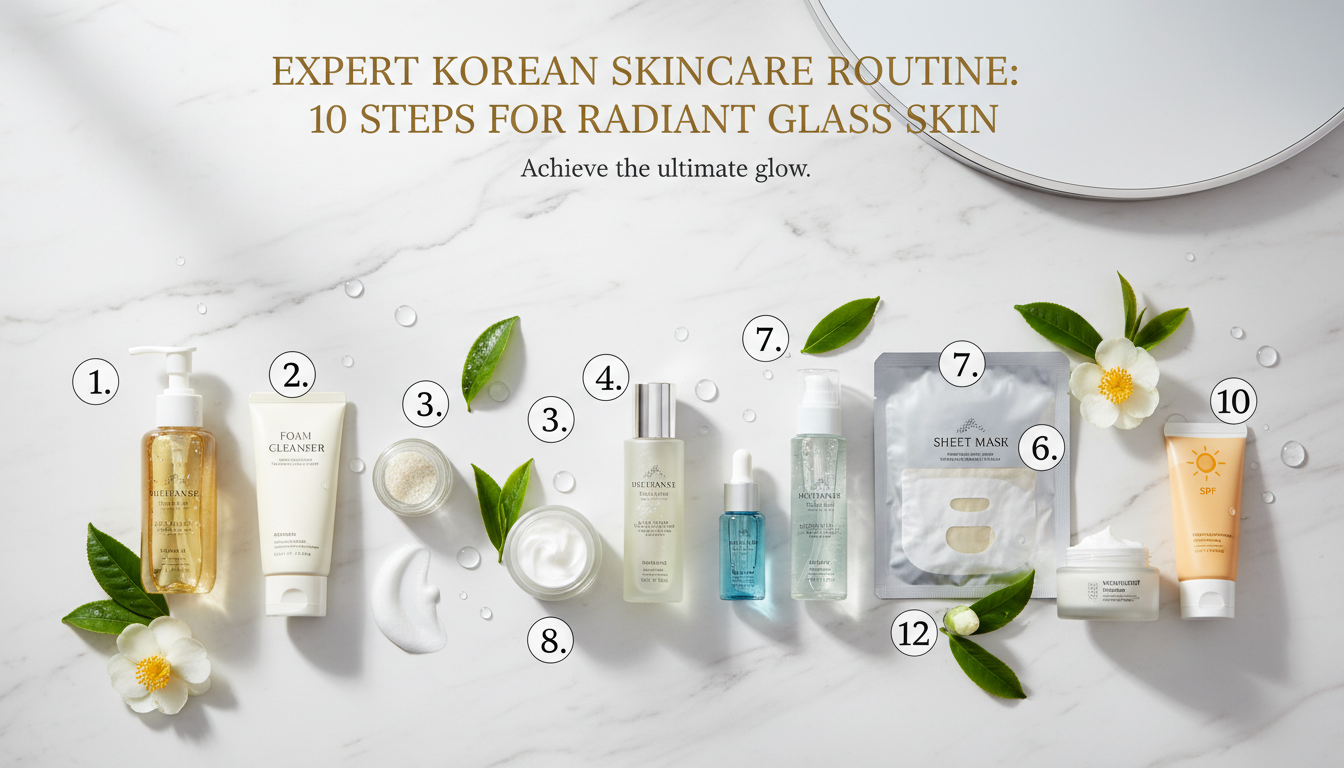
The global fascination with “Glass Skin”—a complexion so clear, hydrated, and luminous that it mimics the reflective surface of glass—is more than just a passing trend. It is a testament to the Korean skincare philosophy, which prioritizes “skin first” over makeup. This approach focuses on deep hydration, nourishment, and a healthy skin barrier rather than temporary fixes.
Achieving this level of radiance requires more than just a single product; it involves a systematic, 10-step routine designed to layer moisture and target specific concerns. While ten steps may sound daunting, the process is rhythmic and therapeutic. Here is an expert breakdown of the authentic Korean skincare routine to help you achieve a resilient, glowing complexion.
Understanding the Philosophy Behind the 10-Step Routine
Before diving into the steps, it is essential to understand that the Korean routine is customizable. You do not necessarily need to perform all ten steps every morning and night. Instead, it is a framework that allows you to listen to your skin’s needs. The core principle is Prevention over Cure: treating the skin before issues arise by maintaining its optimal health and pH balance.
Step 1: Oil-Based Cleanser
The first half of the famous “Double Cleanse” involves an oil-based cleanser. This step is non-negotiable if you wear sunscreen or makeup. Oil attracts oil, meaning these cleansers effectively break down sebum, SPF, and pollutants that water-based cleansers often leave behind.
- How to apply: Massage the oil onto dry skin for 60 seconds to dissolve impurities before rinsing with lukewarm water.
- Expert Tip: Look for ingredients like Jojoba oil or Ginseng seed oil for extra nourishment.
Step 2: Water-Based Cleanser
Following the oil cleanser, a water-based (foam or gel) cleanser removes any remaining residue and sweat. To maintain “Glass Skin,” it is vital to use a low-pH cleanser. High-pH cleansers can strip the skin’s natural acid mantle, leading to dryness and irritation.
Step 3: Gentle Exfoliation
You cannot achieve a glass-like finish on top of dead skin cells. However, Korean skincare favors gentle exfoliation over harsh scrubs. This step should only be performed 2–3 times a week.
- Chemical Exfoliants: AHAs (like Lactic Acid) for surface brightening or BHAs (Salicylic Acid) for pore-clearing.
- PHA: The “New Generation” exfoliant favored in Seoul for its large molecular size, which exfoliates sensitive skin without irritation.
Step 4: The Hydrating Toner
Unlike Western toners of the past that were astringent and drying, Korean toners (often called “Skins”) are designed to hydrate and balance the skin’s pH. They act as a primer, making your skin a “damp sponge” ready to absorb the following treatments more effectively.
Step 5: Essence
Often referred to as the “heart” of the Korean skincare routine, the essence is a hybrid between a toner and a serum. It typically contains fermented ingredients like Galactomyces or Rice Water, which promote cell turnover and offer a boost of hydration that sits deep within the dermis.
Step 6: Serums and Ampoules
This is the treatment phase. Serums and more concentrated ampoules target specific skin concerns such as hyperpigmentation, fine lines, or acne. For glass skin, ingredients like Niacinamide (for pore refinement) and Vitamin C (for brightening) are gold standards.
Recommended Ingredient Education for Radiant Skin
| Ingredient | Primary Benefit | Skin Type |
|---|---|---|
| Hyaluronic Acid | Deep hydration and plumping | All Skin Types |
| Snail Mucin | Repairing and soothing | Dry & Acne-Prone |
| Centella Asiatica | Calming inflammation | Sensitive |
| Propolis | Antibacterial and glow-inducing | Dull Skin |
Step 7: Sheet Masks
Sheet masks provide an occlusive environment, forcing the skin to absorb a high concentration of nutrients in 15–20 minutes. While not a daily requirement, using one twice a week provides the “instant glow” associated with the glass skin aesthetic. Never let a sheet mask dry out on your face, as it can actually begin to pull moisture back out of your skin.
Step 8: Eye Cream
The skin around the eyes is the thinnest on the body and lacks sebaceous glands, making it prone to dehydration and fine lines. Gently tap (never rub) a small amount of eye cream using your ring finger to provide targeted moisture and protection.
Step 9: Moisturizer
Moisturizer acts as the sealant. Without this step, all the previous layers of hydration can evaporate through a process called transepidermal water loss (TEWL). Choose a gel-cream if you have oily skin or a thicker ceramide-based cream if you have dry skin to lock in that “glow.”
Step 10: Sun Protection (AM) or Sleeping Mask (PM)
In the morning, sunscreen is the most important step. You cannot have glass skin if your skin is suffering from UV damage and hyperpigmentation. Korean sunscreens are world-renowned for their elegant textures that leave no white cast.
At night, replace sunscreen with a sleeping mask. These are designed to be extra-occlusive, helping your skin recover and regenerate while you sleep.
Pros and Cons of the 10-Step Routine
Pros
- Deep Customization: You can swap steps based on hormonal changes or seasonal shifts.
- Barrier Health: Focuses on soothing and hydrating rather than stripping the skin.
- Mindfulness: Encourages a consistent self-care ritual that reduces stress.
- Long-term Results: Improves skin texture and elasticity over time.
Cons
- Time-Consuming: It can take 15–20 minutes every morning and night.
- Cost: Purchasing ten separate products can be a significant initial investment.
- Over-stimulation: For those with very reactive skin, introducing too many products at once can cause breakouts (purging).
Expert Tips for Success
To get the best results from your routine, keep these three expert rules in mind:
1. The “Thin-to-Thick” Rule
Always apply products in order of their consistency. Start with the most watery (toner/essence) and finish with the heaviest (cream/oil) to ensure proper absorption.
2. Patch Test New Products
When starting a Korean routine, do not introduce all 10 products at once. Introduce one new product every week to ensure your skin does not have an adverse reaction.
3. Consistency is Queen
Glass skin isn’t achieved overnight. It is the result of consistent hydration and protection over weeks and months.
Frequently Asked Questions
Is the 10-step routine suitable for oily skin?
Yes. Many people with oily skin actually suffer from dehydration, which causes their skin to overproduce oil. By providing deep, watery hydration (Steps 4–6) and using lightweight, gel-based moisturizers, you can balance oil production and achieve a healthy glow without feeling greasy.
Do I have to do all 10 steps every day?
No. The 10-step routine is a maximum. On a busy day, you can stick to the “Core Four”: Double cleanse, toner, moisturizer, and SPF. Save the exfoliation and sheet masks for “spa nights” when you have more time.
How long does it take to see results?
While you may notice increased hydration immediately, significant changes in skin texture and tone usually take one full skin cycle (approximately 28 to 40 days). True “Glass Skin” results are typically visible after 2–3 months of consistent care.
Can I mix different brands?
Absolutely. You do not need to stick to a single brand. In fact, many skincare experts recommend mixing and matching to find the specific “holy grail” ingredients that work for your unique skin chemistry.
—
Topic: Korean skincare routine for glowing skin steps
Tags: #Expert #Korean #Skincare #Routine #Steps #Radiant #Glass #Skin