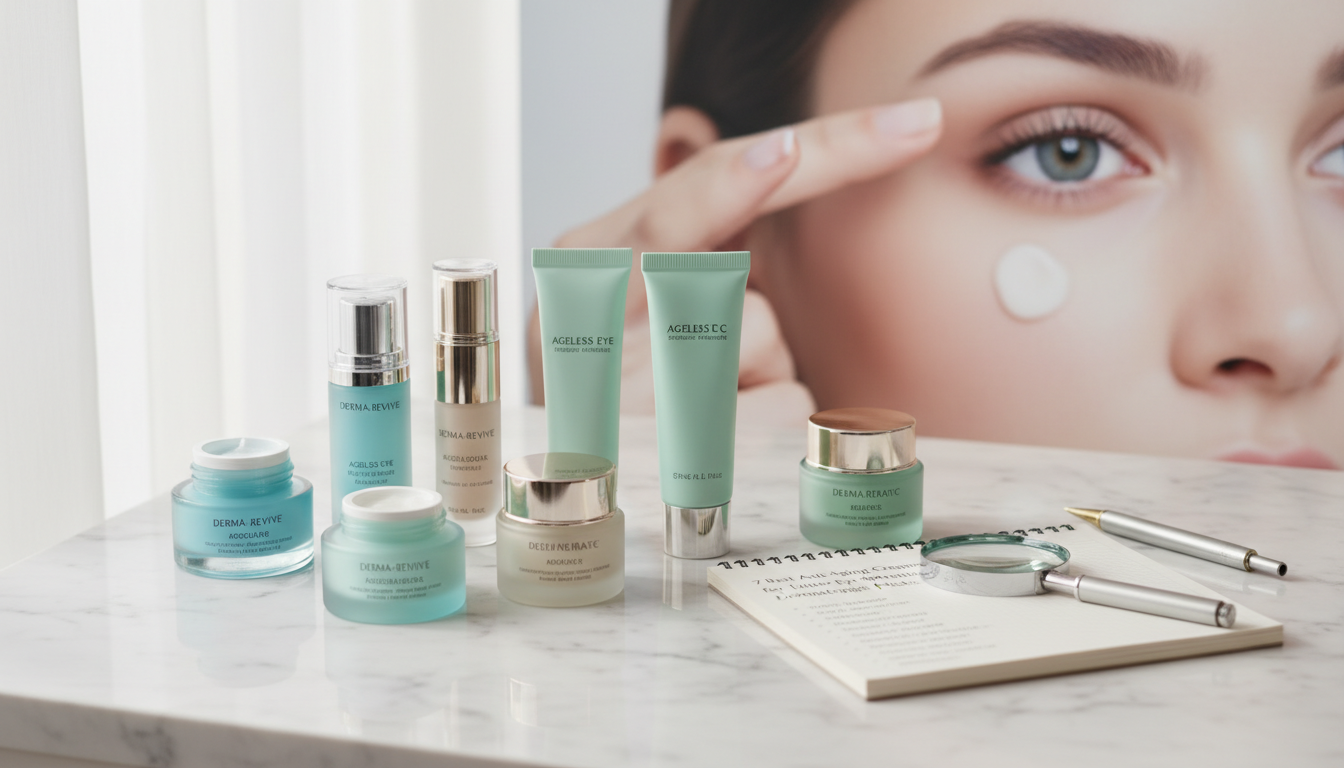
The skin around our eyes is significantly thinner and more delicate than the rest of the face. Lacking the density of oil glands found elsewhere, this area is often the first to show signs of aging, from fine lines and “crow’s feet” to deep-set wrinkles and loss of elasticity. While aging is a natural process, the right topical treatments can significantly slow the progression and even reverse existing damage.
When selecting an anti-aging eye cream, dermatologists prioritize formulas backed by clinical evidence rather than marketing hype. To help you navigate the crowded skincare aisle, we have curated seven top-tier eye creams that target wrinkles through diverse mechanisms, from cellular turnover to deep hydration.
Understanding the Delicate Under-Eye Area
Before diving into specific products, it is essential to understand why this area requires specialized care. The periorbital skin is approximately 40% thinner than the skin on your cheeks. Constant micro-movements—blinking, squinting, and smiling—place repetitive stress on the collagen fibers. Furthermore, external stressors like UV exposure and blue light from screens accelerate the breakdown of elastin.
A high-quality eye cream isn’t just a thicker version of your face moisturizer; it is specifically formulated to be non-irritating to the eyes while delivering active ingredients in a concentration that the thin skin can tolerate.
Key Ingredient Education for Fighting Eye Wrinkles
To achieve visible results, look for these dermatologist-approved “gold standard” ingredients:
- Retinol/Retinoids: The gold standard for collagen production and cellular turnover.
- Peptides: Small proteins that act as messengers, signaling the skin to produce more collagen and elastin.
- Hyaluronic Acid: A humectant that draws moisture into the skin, instantly “plumping” fine lines.
- Vitamin C: A potent antioxidant that protects against environmental damage and brightens dark circles.
- Ceramides: Essential lipids that repair the skin barrier and prevent transepidermal water loss.
- Caffeine: While primarily for puffiness, it also helps constrict blood vessels to create a smoother appearance.
The 7 Best Anti-Aging Creams for Under Eye Wrinkles
1. RoC Retinol Correxion Line Smoothing Eye Cream
Consistently ranked as a top drugstore pick by dermatologists, this cream features a stabilized form of retinol. It is designed to be gentle enough for daily use while being potent enough to reduce the appearance of crow’s feet and puffiness within four weeks. It is an excellent entry-point for those new to retinol eye treatments.
2. SkinCeuticals A.G.E. Advanced Eye
This premium formula targets “Glycation,” a process where excess sugar molecules bind to collagen fibers, causing them to become brittle. By using a high concentration of Proxylane and flavonoids, it helps restore elasticity and thickness to thinning skin. It is particularly effective for those with deep-set wrinkles and crepey texture.
3. La Roche-Posay Redermic R Retinol Eye Cream
If you have sensitive skin but still want the benefits of retinol, this is the go-to recommendation. It utilizes a unique “Pure Retinol + Progressive Release Retinol” complex that delivers the active ingredient over time, significantly reducing the risk of redness or peeling.
4. Neutrogena Rapid Wrinkle Repair Retinol Eye Cream
A powerhouse for those looking for fast results. This formula combines Accelerated Retinol SA with a glucose complex that acts as a booster, speeding up the skin’s surface activity. It is widely available and highly effective for smoothing fine lines in as little as one week of consistent use.
5. Skinmedica TNS Eye Repair
Dermatologists often recommend this for mature skin. It contains human growth factors (TNS), which are proteins that help repair and remodel the skin’s extracellular matrix. It also contains Vitamins C and E to provide antioxidant protection, making it a comprehensive “all-in-one” anti-aging treatment.
6. The INKEY List Caffeine Eye Cream
For those on a budget or concerned with “tired-looking” eyes, this lightweight cream is highly effective. While the caffeine targets puffiness, the added peptides (Matrixyl 3000) work to smooth the skin surface and reduce the appearance of fine lines over time. It is a fantastic preventative option for younger users.
7. Olay Regenerist Vitamin C + Peptide 24 Eye Cream
This fragrance-free cream focuses on brightening and firming. The combination of Vitamin C and Vitamin B3 (Niacinamide) strengthens the skin barrier and evens out skin tone, while peptides work on the underlying structure to lift and firm the eye area. It absorbs quickly, making it ideal for use under makeup.
Comparison of Top Eye Creams
| Product Name | Primary Active | Best For | Price Point |
|---|---|---|---|
| RoC Retinol Correxion | Retinol | General Anti-Aging | Budget-Friendly |
| SkinCeuticals A.G.E. | Proxylane | Deep Wrinkles & Crepey Skin | Luxury |
| La Roche-Posay Redermic R | Gradual Retinol | Sensitive Skin | Mid-Range |
| Neutrogena Rapid Wrinkle Repair | Retinol SA | Fast Results | Budget-Friendly |
| Skinmedica TNS Repair | Growth Factors | Advanced Aging/Repair | Medical Grade |
| The INKEY List Caffeine | Caffeine & Peptides | Puffiness & Prevention | Budget-Friendly |
| Olay Regenerist C + Peptide | Vitamin C/Peptides | Brightening & Firming | Mid-Range |
How to Apply Eye Cream for Maximum Efficacy
Applying your eye cream correctly is just as important as the product itself. Follow these dermatologist-recommended steps:
- The “Pea-Size” Rule: Use a tiny amount (about the size of a pea) for both eyes. Using too much can cause product to migrate into the eye, causing irritation.
- The Ring Finger Technique: Your ring finger has the lightest touch. Use it to gently pat the product into the skin. Never tug or pull.
- The Orbital Bone Path: Apply the cream along the orbital bone (the hard ridge around your eye). The product will naturally migrate slightly toward the lid as it warms up on your skin.
- Consistency is Key: Retinoids and peptides take time to work. Expect to see initial results in 4–6 weeks, with maximum results after 3–6 months of daily use.
Pros and Cons of Anti-Aging Eye Creams
Pros
- Targeted Delivery: Formulated with smaller molecules to penetrate the thin periorbital skin.
- Reduced Irritation: Buffered ingredients are less likely to cause the stinging or “milia” (tiny white bumps) that heavy face creams might cause around the eyes.
- Improved Makeup Application: Hydrated skin prevents concealer from creasing into fine lines.
Cons
- Price: Ounce-for-ounce, eye creams are more expensive than standard moisturizers.
- Time to See Results: They are not a “quick fix” for deep wrinkles; they require long-term commitment.
- Sensitivity: Some actives (like retinol) can cause initial dryness or redness as the skin acclimates.
Frequently Asked Questions
At what age should I start using an anti-aging eye cream?
Dermatologists typically recommend starting a preventative eye care routine in your mid-20s. At this stage, focus on hydration and antioxidants. In your 30s and beyond, transition to active ingredients like retinol and peptides to address visible aging.
Can I just use my regular face moisturizer under my eyes?
While a basic moisturizer is better than nothing, it may not be ideal. Face moisturizers often contain heavy oils that can cause milia, or fragrances and acids that are too harsh for the eye area. Specialized eye creams are ophthalmologist-tested for safety.
Should I apply eye cream before or after my moisturizer?
The general rule of thumb for skincare is to apply products from thinnest to thickest consistency. Usually, this means applying eye cream after your serum but before your heavier face cream or facial oil.
Is it normal for my eye cream to sting slightly?
Some active ingredients, especially retinol, can cause a mild tingling sensation initially. However, if you experience persistent stinging, redness, or swelling, you should stop use immediately and consult a professional, as you may be having an allergic reaction or a compromised skin barrier.
Do eye creams work on dark circles?
It depends on the cause. If dark circles are caused by hyperpigmentation or thin skin showing blood vessels, ingredients like Vitamin C, Niacinamide, and Vitamin K can help. If they are caused by genetics or bone structure (hollowness), topical creams will have limited impact compared to dermal fillers.
—
Topic: Best anti-aging cream for wrinkles under eyes
Tags: #AntiAging #Creams #Eye #Wrinkles #Dermatologist #Picks